
The Immunoassays (Research Use Only)
What is Glucose-dependent insulinotropic polypeptide?
Glucose-dependent insulinotropic polypeptide (GIP) (also known as gastric inhibitory polypeptide) is an incretin hormone produced in the upper gut and secreted to the circulation in response to the ingestion of foods, especially fatty foods(1). It is a peptide hormone consisting of 42 amino acids and derives from posttranslational processing of pre-pro-GIP, a protein consisting of 153 amino acids. It is structurally similar to members of the secretin/glucagon family that include secretin, glucagon, vasoactive intestinal peptide, and growth hormone-releasing factor(2).

What are the main forms of GIP?
Gastric Inhibitory Polypeptide (GIP) can exist in various forms, and these forms refer to different molecular structures or fragments of the GIP molecule. The two main forms of GIP that are often referred to are:
Intact GIP (1-42, 3-42): This is the biologically active, full-length form of GIP. Intact GIP consists of 42 amino acids and is the active hormone that plays a role in stimulating insulin release from pancreatic beta cells. This form of GIP is typically what is measured when researchers or clinicians are assessing GIP levels.
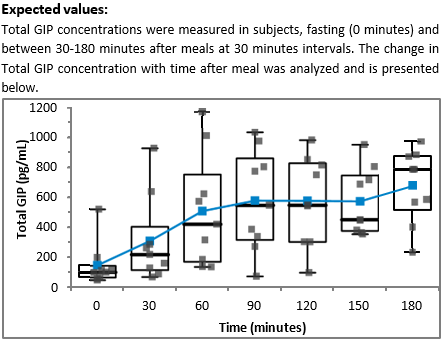
Total GIP (1-30, 1-42, 3-42): Total GIP includes not only the intact GIP (1-42) but also any metabolites or fragments of GIP that may be present. This measurement provides a broader view of the total amount of GIP in the system, taking into account any breakdown products or modifications. It can include fragments of GIP resulting from enzymatic processes or other modifications.
The distinction between intact GIP and total GIP is important in research and clinical contexts. While intact GIP is the biologically active form responsible for the incretin effect and insulin release, total GIP gives a more comprehensive picture of the total GIP levels, including any breakdown products that may also have biological activity or relevance.
A brief overview of the potential value of measuring Gastric Inhibitory Polypeptide (GIP):
Obesity and Metabolic Disorders:
Abnormalities in GIP signaling have been associated with obesity and metabolic disorders. Measuring GIP levels may be relevant in understanding the hormonal factors contributing to these conditions and developing targeted interventions.
Glucose Regulation:
GIP plays a role in glucose homeostasis by stimulating the release of insulin from pancreatic beta cells. Measuring GIP levels can provide information about the incretin effect, where hormones released in response to food intake enhance insulin secretion and help regulate blood glucose levels.
Metabolism:
GIP has metabolic effects beyond insulin release. It can influence fat metabolism, and elevated GIP levels may contribute to adipose tissue growth. Measuring GIP levels can offer insights into the metabolic impact of ingested nutrients.
Nutrient Absorption:
GIP is released in response to nutrient absorption, particularly in the presence of glucose and fat. Monitoring GIP levels can help researchers and healthcare professionals understand how different nutrients affect hormone secretion and absorption.
Drug Development:
GIP-related research can be valuable in the development of drugs targeting glucose regulation and metabolic disorders. Measuring GIP levels in clinical trials can provide data on the efficacy of new treatments and has already lead to the introduction of new drugs for T2D.
Research on Gut-Brain Axis:
GIP is part of the complex gut-brain axis, which involves communication between the gastrointestinal tract and the central nervous system. Studying GIP levels can contribute to a better understanding of these interactions and their impact on overall health.
| Intact GIP ELISA (AL-1022) | Total GIP ELISA (AL-1013) |
Literature for Intact and Total GIP ELISA kits:
The Immunoassays (Research Use Only)
| Intact GIP ELISA (AL-1022) | Total GIP ELISA (AL-1013) |
|
|
Intact GIP Expected Values |
Total GIP Expected Values |

|
|
Analytical Specificity |
|
 |
|
Related Assays: |
|
|
C-Peptide of Insulin |
Glicentin Glucagon Major Proglucagon Fragment Oxyntomodulin Proglucagon |
Page References:
1. Fukuda M. The Role of GIP Receptor in the CNS for the Pathogenesis of Obesity. Diabetes. 2021 Sep;70(9):1929-1937. doi: 10.2337/dbi21-0001. Epub 2021 Jun 27. PMID: 34176784; PMCID: PMC8576424.
2. Gupta K, Raja A. Physiology, Gastric Inhibitory Peptide. [Updated 2022 Sep 26]. StatPearls Publishing; 2023 Jan-. Available from: https://www.ncbi.nlm.nih.gov/books/NBK546653/
All information is provided for educational purposes. All assays indicated are for Research Use Only